The 2026 Guide to Cybersecurity Risk Identification: Strategies, Role-Specific Examples, and Future Trends
Why Risk Identification is Your First Line of Defense?
In 2026, the digital landscape isn't just "connected"—it's hyper-automated and increasingly autonomous. With the rise of agentic AI and quantum-ready encryption, the old ways of identifying risk (like the annual manual audit) are about as effective as bringing a paper map to a self-driving car race.
Risk identification is the process of finding, recognizing, and describing risks that could prevent an organization from achieving its objectives. In cybersecurity, it's the foundational step of the risk management lifecycle. Without a robust identification phase, you aren't just flying blind; you're inviting disaster to sit in the pilot's seat.
This guide provides a comprehensive deep dive into risk identification, tailored for the complexities of 2026. We'll look at the frameworks that matter, the techniques that work, and—most importantly—how different positions within your company see (and stop) risk.
The Core Components: Risks, Threats, and Vulnerabilities
Before we dive into role-specific scenarios, we must speak the same language. In the world of security, these three terms are often used interchangeably, but they are distinct variables in the security equation.
The Equation of Risk
In formal risk assessments, we often use a simplified version of the following formula to quantify the danger:
Risk = Likelihood * Impact
Vulnerability: A weakness in an asset or control that can be exploited by one or more threats. (e.g., an unpatched AI model or a weak password).
Threat: A potential cause of an unwanted incident, which may result in harm to a system or organization. (e.g., a state-sponsored hacker or a deepfake phishing attempt).
Impact: The result of an unwanted incident. (e.g., $10M in lost revenue or a 20% drop in stock price).
Risk Identification is the art of connecting these dots. It's identifying that Vulnerability A could be exploited by Threat B, leading to Impact C.
Role-Based Risk Identification: A 360-Degree View
Cybersecurity is no longer "an IT problem." It is a business imperative. In 2026, the most resilient companies are those where every department—from HR to Legal—understands their unique vantage point for spotting risks.
A. The C-Suite: Strategic and Reputational Risk
Executives don't look at "SQL injections"; they look at "business continuity." For a CEO or CFO, risk identification is about the survival of the brand.
Example Risk:AI Governance Failure.
The Scenario: The company deploys an internal AI agent to handle customer data. The C-Suite must identify the risk of "Model Inversion" or "Prompt Injection" which could lead to a massive data leak.
Impact: Loss of market trust, regulatory fines, and a plummeting valuation.
Example Risk:M&A Technical Debt.
The Scenario: During a merger, the executive team must identify the risk of inheriting "orphan systems" from the acquired company that lack modern zero-trust controls.
B. Human Resources (HR): The Human Element
As of 2026, over 60% of breaches still involve a human element—whether through error or social engineering.
Example Risk:Deepfake Impersonation.
The Scenario: HR identifies that their current remote-onboarding process is vulnerable to "synthetic identity fraud" or deepfake video calls.
The Identification: Recognizing that their verification software hasn't been updated to detect 2026-era generative AI video.
Example Risk:Insider Threat (The Disgruntled "Quiet Quitter").
The Scenario: HR spots a risk pattern where employees leaving the company still have active access to proprietary AI weights or customer databases for 48 hours post-termination.
C. Information Technology & DevOps: Technical & Operational Risk
This is where the rubber meets the road. IT professionals identify the "how" of a potential breach.
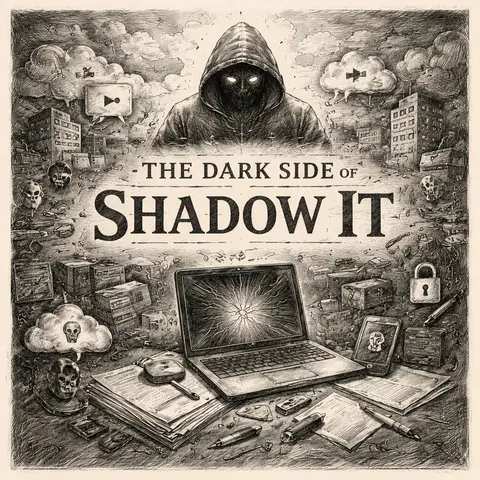
Example Risk:Shadow AI and API Proliferation.
The Scenario: Developers are using unauthorized "AI assistants" to write code. IT identifies the risk that proprietary source code is being fed into public LLMs.
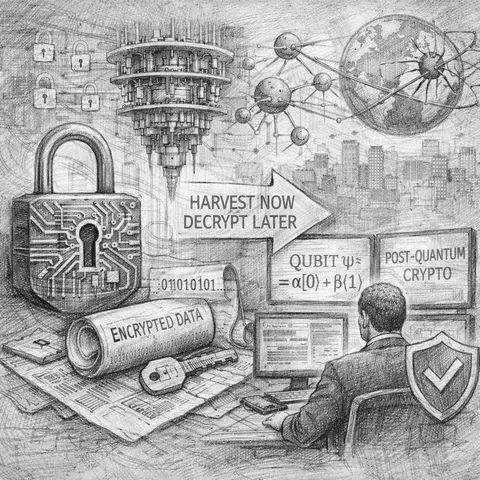
Example Risk:Quantum Decryption Vulnerability.
The Scenario: IT identifies that the company's long-term archived data is encrypted with legacy RSA-2048, which is now vulnerable to "harvest now, decrypt later" attacks by quantum-capable adversaries.
D. Legal and Compliance: Regulatory Risk
In 2026, global privacy laws (GDPR 2.0, CCPA updates) have become more aggressive.
Example Risk:Non-Compliance with Automated Decision-Making.
The Scenario: Legal identifies a risk where the company's AI-driven credit scoring doesn't meet the "Right to Explanation" requirements of new international laws.
Example Risk:Contractual Security Breaches.
The Scenario: Identifying that a third-party SaaS provider has downgraded their security tier without notifying the legal team, violating the Master Service Agreement (MSA).
E. Sales and Marketing: Outreach and Brand Risk
Example Risk:Brand Hijacking via AI Search.
The Scenario: Marketing identifies that AI-driven search engines are being "poisoned" by competitors to link the company's brand to malicious phishing sites.
Top Techniques for Risk Identification in 2026
How do you actually find these risks? It requires a mix of old-school brainstorming and new-school automation.
1. Continuous Exposure Management (CEM)
Gone are the days of the "once-a-year" penetration test. In 2026, companies use CEM platforms. These tools act like a "friendly hacker" that never sleeps, constantly scanning the attack surface for new vulnerabilities as they appear.
2. Threat Modeling (STRIDE)
Threat modeling is a structured approach to identifying risks during the design phase of a project. The STRIDE framework remains a gold standard:
Spoofing (Identity)
Tampering (Data Integrity)
Repudiation (Accountability)
Information Disclosure (Privacy)
Denial of Service (Availability)
Elevation of Privilege (Authorization)
3. The Delphi Method
For high-level strategic risks, companies use the Delphi Method. This involves a panel of experts (CISO, Legal Counsel, Head of AI) who provide anonymous risk assessments in multiple rounds until a consensus is reached. This prevents "Groupthink" where everyone just agrees with the CEO.
4. Automated Red Teaming (ART)
Using agentic AI, organizations can now simulate complex, multi-stage attacks against their own infrastructure to identify hidden risks that human scanners might miss.
Building the Risk Register: A Practical Example
Once a risk is identified, it must be documented. A Risk Register is the "ledger" of your security threats.
Risk ID
Description
Potential Impact
Likelihood
Owner
Mitigation Strategy
R-201
Deepfake Vishing of CFO
Financial Loss
Medium
CISO / HR
Multi-factor voice auth
R-202
Unpatched API in Cloud
Data Breach
High
DevOps
Automated Patching
R-203
Supply Chain AI Backdoor
Operational Halt
Low
Procurement
Third-party AI audits
2026 Trends: The Changing Face of Risk
As we move further into 2026, three trends are fundamentally shifting how we identify risk:
A. The "Agentic" Attack Surface
As companies deploy AI "agents" that can make decisions (e.g., an AI that can autonomously buy ads or move money), the risk of "Agent Hijacking" becomes a top-tier identification priority. We are no longer just protecting data; we are protecting agency.
B. Hyper-Personalized Social Engineering
Attackers now use LLMs to scrape an employee's entire social media presence to create a phishing email that is indistinguishable from a legitimate communication from a spouse or colleague. Risk identification now requires behavioral analytics—identifying the risk of "unusual communication patterns."
C. Regulatory "Speed-to-Fine"
Regulators now use AI to audit company disclosures. The risk of "Misrepresenting Security Posture" is now a major legal threat. If you say you have Zero Trust but your internal logs say otherwise, an automated regulator might flag you for a fine before a human even looks at the file.
Common Pitfalls in Risk Identification
Avoid these classic mistakes to ensure your risk assessment actually means something:
Ignoring "Low Likelihood, High Impact" Risks: These are the "Black Swan" events. Many companies ignored the risk of a global pandemic or a major cloud provider going down for 48 hours—until it happened.
Working in Silos: If IT identifies a technical risk but doesn't tell the Legal team, the company might be breaking a law they don't even know exists.
Static Identification: Identifying risks once a year is like checking your pulse once a year. By the time you realize something is wrong, it's too late. Risk identification must be continuous.
Conclusion: The Path Forward
Risk identification in 2026 is a team sport. It requires the technical precision of a security engineer, the strategic vision of a CEO, and the human intuition of an HR professional. By moving away from reactive "firefighting" toward a culture of proactive identification, your organization can turn cybersecurity from a cost center into a competitive advantage.
Remember: You can't defend what you haven't identified.
 Change Management