Preparing an ISO 27001 Cybersecurity Maturity Comparison

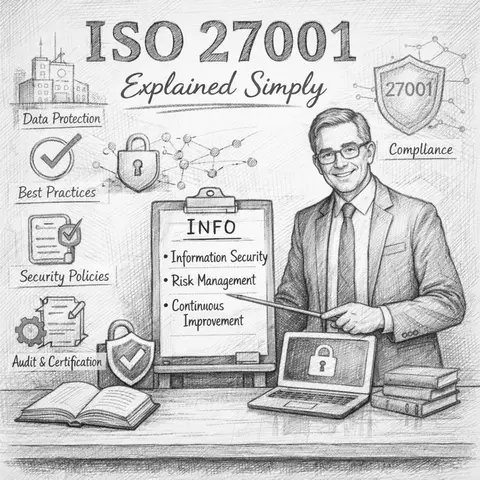
A maturity comparison is a structured method used to evaluate the organization's current state of security controls against the desired maturity level required for ISO/IEC 27001 compliance. This document explains how to prepare such a comparison, score each domain, and present results to stakeholders.


Purpose of an ISO 27001 Maturity Comparison

An ISO 27001 maturity comparison answers three essential questions:

  • Where do we stand today?
  • Where should we be to comply with ISO 27001?
  • What actions are required to close the gap?

This analysis supports:

  • Certification readiness
  • Risk-based prioritization
  • Executive communication
  • Continuous improvement of the ISMS

Maturity Model Used

Use a 0-5 scale aligned to ISO 27001 governance and improvement requirements.

LevelNameDescription
0 - Non-existentNo controls or processes in place
1 - Ad-hocControls exist informally; inconsistent application
2 - RepeatableControls applied consistently but not documented
3 - DefinedControls are documented and communicated across the organization
4 - ManagedControls are monitored, measured, and reviewed
5 - OptimizedControls are continuously improved and automated

This scale supports ISO 27001 clauses on performance evaluation and continual improvement.


ISO 27001-Aligned Security Domains

Map your maturity scoring to Annex A control groups (A.5-A.18). Suggested domains:

  1. A.5 Information Security Policies
  2. A.6 Organization of Information Security
  3. A.7 Human Resource Security
  4. A.8 Asset Management
  5. A.9 Access Control
  6. A.10 Cryptography
  7. A.11 Physical & Environmental Security
  8. A.12 Operations Security
  9. A.13 Communications Security
  10. A.14 System Acquisition, Development & Maintenance
  11. A.15 Supplier Relationships
  12. A.16 Incident Management
  13. A.17 Business Continuity & DR
  14. A.18 Compliance

You may adjust domains based on organizational scope.


Collecting Evidence for Maturity Scoring

To determine the current maturity, gather:

  • Documented policies and procedures
  • Records of implementation (e.g., logs, screenshots, tickets)
  • Tool configurations
  • Training records
  • Interviews with process owners
  • Internal audit results

Only score domains based on verifiable evidence.


Scoring Current vs. Target Maturity

Rate each ISO 27001 domain using the 0-5 model.

Example Maturity Table

ISO 27001 DomainCurrentTargetGapNotes
A.5 Policies341Policies exist but annual review missing
A.8 Asset Management242No automated asset discovery
A.9 Access Control341MFA not fully enforced
A.12 Operations Security253Logs collected but not monitored
A.16 Incident Management143IR plan not tested

Visualizing the Maturity Comparison

Recommended chart types:

  • Radar chart: Best for showing multiple ISO domains
  • Bar chart: Clear comparison of current vs. target levels

ISO 27001 Maturity Comparison (Text Chart)

A.5 Policies               | Current: ███ (3)      | Target: ████ (4)
A.8 Asset Management       | Current: ██ (2)       | Target: ████ (4)
A.9 Access Control         | Current: ███ (3)      | Target: ████ (4)
A.12 Operations Security   | Current: ██ (2)       | Target: █████ (5)
A.16 Incident Management   | Current: █ (1)        | Target: ████ (4)
A.17 Business Continuity   | Current: ███ (3)      | Target: ████ (4)
A.18 Compliance            | Current: ████ (4)     | Target: █████ (5)
 
Legend:
 
Each block █ ≈ 1 maturity point
 
Scale: 0-5

Gap Analysis Summary

Explain major gaps and associated risks.

Example:

  • Incident Management (A.16): No documented or tested incident response plan, representing a high risk of prolonged downtime and potential non-compliance.
  • Operations Security (A.12): Lack of SIEM tuning reduces ability to detect threats in a timely manner.
  • Asset Management (A.8): Manual inventory creates inaccuracies and reduces ability to evaluate risk effectively.

ISO 27001 Roadmap to Close Gaps

Align your roadmap with ISO 27001 risk treatment and continual improvement requirements.

Example Roadmap

ObjectiveRequired ActionsOwnerDeadline
Improve Incident Management to Level 4Develop IR plan, run tabletop exercise, implement escalation workflowSecurity ManagerQ2
Improve Operations Security to Level 4Tune SIEM, implement monitoring dashboards, define metricsSOC LeadQ3
Enhance Asset ManagementDeploy automated discovery tool, inventory review every quarterIT OpsQ4

Final Deliverable Structure

A complete ISO 27001 maturity comparison package should include:

  • Executive summary
  • Scoring table
  • Visual charts
  • Evidence-based findings
  • Gap analysis
  • Treatment plan / roadmap
  • References to ISO 27001 controls

This creates a transparent and auditable record for certification and management review.


Example Executive Summary (Ready to Use)

The maturity assessment demonstrates an overall security maturity of 2.3, compared with the target maturity of 3.8 required for ISO 27001 readiness. Major gaps exist in Operations Security, Incident Response, and Asset Management. A prioritized roadmap is proposed to reach compliance maturity within 12 months, in alignment with the organization's risk tolerance and regulatory obligations.


Conclusion

A structured ISO 27001 maturity comparison provides clear insight into current readiness, highlights risks, and establishes a transparent improvement plan. It is a critical component of ISMS governance and supports effective certification preparation.