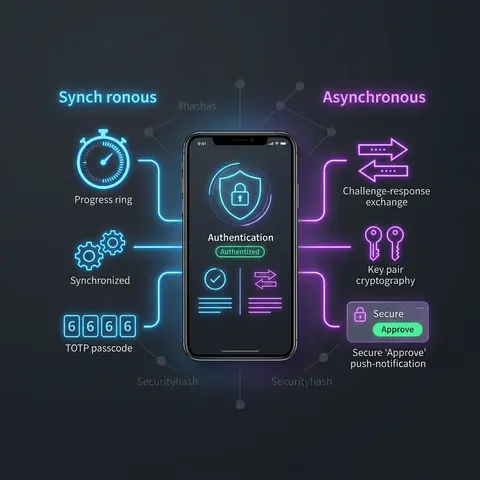
Understanding STRIDE: The Definitive Guide to the Threat Modeling Methodology
Threat modeling is a foundational activity in modern application security.
It allows engineering and security teams to systematically identify, evaluate, and mitigate potential security threats before a single line of code is written or deployed to production.
Among the various frameworks available to guide this analytical process, STRIDE remains one of the most widely adopted, enduring, and effective methodologies.
Developed by Microsoft in the late 1990s as a core component of their Security Development Lifecycle (SDL), STRIDE provides a structured, mnemonic-based approach to brainstorming and categorizing security threats.
Instead of asking open-ended questions like "What could go wrong?", STRIDE forces practitioners to view the system through the lens of six specific threat categories.
This structured approach ensures comprehensive coverage and prevents critical vulnerabilities from slipping through the cracks during the design phase.
This article provides an in-depth exploration of the STRIDE methodology.
We will examine each of its six components in detail, analyze real-world scenarios, discuss standard mitigation strategies, and explore how to integrate STRIDE effectively into modern DevSecOps pipelines.
The Origins and Purpose of STRIDE
The acronym STRIDE was created by Loren Kohnfelder and Praerit Garg at Microsoft in 1999.
At the time, the software industry was grappling with a surge in complex security vulnerabilities, and developers lacked a standardized vocabulary to discuss and document architectural flaws.
STRIDE was designed to be easily understood by developers, architects, and security professionals alike, bridging the communication gap between these often-siloed disciplines.
The primary goal of STRIDE is not to serve as an exhaustive checklist of every possible attack vector.
Instead, it acts as a heuristic tool designed to stimulate critical thinking and uncover design flaws early in the Software Development Life Cycle (SDLC).
By evaluating a system's architecture against the six STRIDE categories, teams can identify missing security controls and design appropriate countermeasures.
Breaking Down the STRIDE Framework
The STRIDE mnemonic stands for six distinct categories of security threats.
Each category targets a specific security property, mapping directly to foundational information security principles such as the CIA Triad (Confidentiality, Integrity, Availability) and AAA (Authentication, Authorization, Accountability).
The six categories are:
SpoofingTamperingRepudiationInformation DisclosureDenial of ServiceElevation of Privilege
Let us explore each category in comprehensive detail.
Spoofing (Identity)
Spoofing involves an attacker successfully impersonating a user, a system component, a process, or an external entity.
The core objective of a spoofing attack is to bypass authentication controls by deceiving the system into believing that the malicious actor is a legitimate, authorized entity.
Spoofing directly violates the security property of Authentication.
Common Spoofing Scenarios
Spoofing can manifest in numerous forms across different layers of the technology stack.
At the network level, IP spoofing involves manipulating the source IP address in packet headers to bypass IP-based access controls.
MAC spoofing alters the hardware address of a network interface to circumvent Layer 2 filtering.
At the application layer, session hijacking allows an attacker to steal a valid user's session token and masquerade as that user.
Similarly, email spoofing is frequently used in phishing campaigns to make malicious messages appear as though they originate from a trusted domain or executive.
Mitigation Strategies for Spoofing
The primary defense against spoofing is robust authentication.
To mitigate user spoofing, organizations must implement strong credential management.
This includes enforcing complex passwords and mandating Multi-Factor Authentication (MFA) across all critical interfaces.
Session tokens must be generated cryptographically, tied to specific client contexts, and invalidated appropriately upon logout or timeout.
For system-to-system spoofing, mutual TLS (mTLS) is a highly effective mitigation.
By requiring both the client and the server to present valid X.509 certificates, mTLS ensures that both parties mathematically prove their identities before establishing a connection.
Additionally, implementing robust API gateways, employing digital signatures, and utilizing secure protocols like OAuth 2.0 and OpenID Connect (OIDC) can significantly reduce spoofing risks.
Tampering (Integrity)
Tampering occurs when an attacker maliciously modifies data in transit, data at rest, or the code executing within a system.
The objective is to alter the state or behavior of the application to achieve a malicious outcome.
Tampering attacks represent a direct violation of the security property of Integrity.
Common Tampering Scenarios
Tampering threats are ubiquitous in environments that lack proper cryptographic controls or strict input validation.
If an application transmits sensitive data over unencrypted HTTP, an attacker positioned on the network can intercept and modify the payload using a Man-in-the-Middle (MitM) attack.
At the database layer, SQL Injection (SQLi) is a classic form of tampering where an attacker alters backend database queries to modify, delete, or exfiltrate records.
Data at rest is also highly vulnerable to tampering.
If log files are stored without appropriate access controls, an attacker who breaches the system can alter or delete the logs to erase the forensic trail of their activities.
Similarly, modifying application binaries, configuration files, or software dependencies can introduce backdoors and establish persistence.
Mitigation Strategies for Tampering
Protecting against tampering requires a combination of cryptographic safeguards and stringent access controls.
To protect data in transit, all communications must be encrypted using strong protocols such as TLS 1.2 or TLS 1.3.
Digital signatures and Hashed Message Authentication Codes (HMAC) should be employed to verify the integrity of messages and ensure they have not been altered during transmission.
For data at rest, strong file system permissions and database access controls are essential.
Role-Based Access Control (RBAC) should be strictly enforced to limit who can modify critical configurations or sensitive data stores.
Furthermore, input validation and parameterized queries must be implemented defensively to neutralize injection attacks that attempt to tamper with backend data structures.
Repudiation (Non-Repudiation)
Repudiation refers to a scenario where a user, system, or attacker performs an action but later denies having done so, and the system lacks the evidence to prove otherwise.
This threat is unique because it is as much a legal and compliance issue as it is a technical one.
Repudiation attacks violate the security property of Non-Repudiation (and Accountability).
Common Repudiation Scenarios
A classic example of repudiation occurs in financial systems.
If a user transfers a large sum of money and later claims they never authorized the transaction, the bank must have irrefutable cryptographic and audit evidence to prove the user's involvement.
If the application logs are incomplete, easily tampered with, or lack sufficient context (such as timestamps, IP addresses, and user IDs), the organization cannot defend against the user's claim.
Another common scenario involves malicious insiders.
If an administrator deletes a critical database table but the system utilizes shared administrative accounts (e.g., a generic "admin" user), it becomes impossible to attribute the destructive action to a specific individual.
Mitigation Strategies for Repudiation
Defeating repudiation requires comprehensive, secure, and tamper-evident logging mechanisms.
Every significant security event, state change, and financial transaction must be logged meticulously.
Logs must include contextual metadata, such as the exact timestamp (synchronized via NTP), the authenticated user's identity, the source IP address, and the specific action performed.
Crucially, the logging infrastructure itself must be protected from tampering.
Logs should be forwarded in real-time to a centralized, immutable Security Information and Event Management (SIEM) system.
Digital signatures can be applied to log entries to provide cryptographic proof of their integrity.
Furthermore, the use of shared accounts must be strictly prohibited to ensure that every action can be definitively linked to a distinct, authenticated human or service identity.
Information Disclosure (Confidentiality)
Information Disclosure happens when an application inadvertently exposes sensitive data to individuals or systems that are not authorized to access it.
This threat can result from architectural flaws, configuration errors, or direct exploitation by an attacker.
Information Disclosure is a direct violation of the security property of Confidentiality.
Common Information Disclosure Scenarios
This threat category is incredibly broad and accounts for a massive percentage of modern data breaches.
Common examples include exposing database credentials or API keys within public source code repositories like GitHub.
Misconfigured cloud storage buckets (such as Amazon S3) that allow public read access are another prevalent source of catastrophic information disclosure.
At the application layer, verbose error messages are a frequent culprit.
If an application crashes and displays a stack trace containing database connection strings or internal file paths to the end user, an attacker can use this intelligence to map the internal architecture.
Insecure Direct Object References (IDOR), where an attacker manipulates a parameter (like a user ID in a URL) to access another user's private data, is another classic example of information disclosure.
Mitigation Strategies for Information Disclosure
Protecting confidentiality requires a defense-in-depth approach centered on encryption and authorization.
Sensitive data must be encrypted both at rest (using algorithms like AES-256) and in transit (using TLS).
Cryptographic keys must be managed securely using dedicated Key Management Systems (KMS) or Hardware Security Modules (HSM).
Authorization controls must be implemented rigorously.
The principle of least privilege should be applied to all users, services, and processes, ensuring they have only the minimum access necessary to perform their functions.
Applications must implement proper error handling, catching exceptions gracefully and displaying generic, non-descriptive error messages to end-users while logging the detailed technical errors internally.
Denial of Service (Availability)
Denial of Service (DoS) attacks aim to disrupt the normal operation of a system, rendering it unavailable to legitimate users.
Attackers achieve this by exhausting system resources, such as network bandwidth, CPU cycles, memory, or disk space, or by crashing the application entirely.
DoS threats violate the security property of Availability.
Common Denial of Service Scenarios
Network-level DoS attacks, such as UDP floods or SYN floods, attempt to overwhelm routers, firewalls, or servers with a massive volume of garbage traffic.
Distributed Denial of Service (DDoS) attacks amplify this effect by leveraging vast botnets of compromised devices.
However, DoS threats are not limited to the network layer.
Application-layer DoS (Layer 7 DoS) attacks are often more sophisticated and require significantly fewer resources to execute.
For example, an attacker might repeatedly trigger a computationally expensive search query or an image processing function, quickly exhausting the server's CPU.
Resource exhaustion can also occur if an application fails to release database connections or memory allocations properly, eventually leading to a complete system halt.
Mitigation Strategies for Denial of Service
Mitigating DoS threats requires a combination of architectural resilience and active filtering.
At the infrastructure level, organizations should utilize Content Delivery Networks (CDNs) and dedicated DDoS mitigation services to absorb and scrub volumetric attacks before they reach the origin servers.
Implementing High Availability (HA) architectures, auto-scaling groups, and load balancers ensures that the system can dynamically provision additional resources during traffic spikes.
At the application level, developers must implement rate limiting and throttling to restrict the number of requests a single user or IP address can make within a specific timeframe.
Input validation must be strict to prevent attackers from submitting excessively large payloads designed to consume memory.
Furthermore, asynchronous processing and message queues can be used to decouple resource-intensive tasks from the main application thread, preventing them from blocking legitimate user traffic.
Elevation of Privilege (Authorization)
Elevation of Privilege (also known as Privilege Escalation) occurs when an attacker with limited access rights successfully exploits a vulnerability to gain higher-level permissions.
This allows the attacker to execute unauthorized commands, access restricted data, or take complete control of the system.
Elevation of Privilege violates the security property of Authorization.
Common Elevation of Privilege Scenarios
Privilege escalation typically occurs in two forms: vertical and horizontal.
Vertical escalation happens when a standard, low-privileged user manages to acquire administrative or root-level capabilities.
This often results from vulnerabilities like buffer overflows, insecure deserialization, or misconfigured file permissions that allow a user to execute code in the context of a highly privileged service account.
Horizontal escalation occurs when a user gains the permissions of another user at the same privilege level.
This is often achieved by exploiting authorization flaws in the application's business logic.
For instance, if a web application relies solely on client-side controls (like hidden form fields) to determine user roles, an attacker can simply modify the HTTP request to grant themselves administrative rights.
Mitigation Strategies for Elevation of Privilege
Preventing elevation of privilege requires an unwavering commitment to the principle of least privilege and robust, server-side authorization checks.
Applications must never trust client-side input when making authorization decisions.
Every request to access a protected resource or perform a privileged action must be validated on the backend against a secure, server-side session or a cryptographically signed token (like a JWT).
Role-Based Access Control (RBAC) or Attribute-Based Access Control (ABAC) should be implemented to enforce strict boundaries between different user tiers.
In the operating system and container environments, services should run as non-root users with minimal capabilities.
Additionally, regular vulnerability scanning and penetration testing are critical to identifying and patching software flaws that could be leveraged to execute unauthorized code.
Applying STRIDE in Practice: Data Flow Diagrams
To effectively apply the STRIDE methodology, organizations typically utilize Data Flow Diagrams (DFDs).
A DFD is a visual representation of how data moves through a system, highlighting the various components and their interactions.
A standard DFD consists of four primary elements:
External Entities: Users, external APIs, or other systems that interact with the application.
Processes: The application code, web servers, or services that process data.
Data Stores: Databases, file systems, or caches where data is kept at rest.
Data Flows: The network connections or internal pathways that data travels along between the other elements.
Once the DFD is created, security analysts apply the STRIDE framework systematically.
They define Trust Boundaries—conceptual lines that separate areas of different trust levels, such as the internet versus the internal corporate network.
The analysis can be performed in two primary ways:
STRIDE-per-Element: The analyst evaluates each DFD element (Process, Data Store, Data Flow, External Entity) against the relevant STRIDE categories.
For example, a Data Store is primarily susceptible to Tampering, Information Disclosure, and Denial of Service, whereas a Data Flow is susceptible to Tampering, Information Disclosure, and Spoofing.
STRIDE-per-Interaction: The analyst focuses on the interactions (Data Flows) crossing the Trust Boundaries, assessing what could go wrong as data moves from a low-trust environment to a high-trust environment.
Integrating STRIDE into DevSecOps
Historically, threat modeling was often performed as a monolithic exercise late in the development cycle, frequently delaying deployments.
In modern DevSecOps environments, this approach is unsustainable.
STRIDE must be adapted to fit agile methodologies and rapid release cycles.
To integrate STRIDE effectively, organizations are shifting toward "Threat Modeling as Code" and continuous threat modeling practices.
Instead of massive, system-wide threat models, teams perform lightweight STRIDE assessments on individual features or user stories during the sprint planning phase.
If a developer is tasked with adding a new API endpoint, they briefly consider how that specific endpoint might be spoofed, tampered with, or used for information disclosure.
Automated tools and integrations, such as the OWASP Threat Dragon or tools that parse infrastructure-as-code (IaC) templates, can help generate baseline threat models automatically.
These baselines can then be refined by human experts, ensuring that security is continuously evaluated as the application architecture evolves.
Alternatives and Complementary Frameworks
While STRIDE is highly effective, it is not the only framework available, and it is often used in conjunction with others to provide a more holistic view of security risk.
PASTA (Process for Attack Simulation and Threat Analysis): PASTA is a risk-centric threat modeling methodology that aligns technical threats with business objectives.
While STRIDE focuses heavily on technical flaws, PASTA ensures that the business impact of a vulnerability is properly weighted during the risk assessment process.
DREAD: Originally developed by Microsoft as an extension to STRIDE, DREAD is used for risk rating rather than threat identification.
It calculates risk based on Damage potential, Reproducibility, Exploitability, Affected users, and Discoverability.
However, DREAD has fallen out of favor in recent years due to the subjectivity of its scoring metrics, with many organizations preferring frameworks like CVSS.
MITRE ATT&CK: While not a traditional threat modeling framework, the MITRE ATT&CK matrix provides an extensive knowledge base of real-world adversary tactics and techniques.
Many organizations use STRIDE to identify theoretical design flaws and then use MITRE ATT&CK to understand how advanced persistent threats (APTs) might exploit those flaws in a live environment.
The Enduring Value of STRIDE
The beauty of the STRIDE methodology lies in its elegant simplicity.
By distilling the vast and complex landscape of cybersecurity threats into six memorable categories, it provides an accessible entry point for developers and architects to engage meaningfully with security concepts.
When applied consistently during the design phase, STRIDE prevents costly architectural mistakes, reduces the reliance on reactive patching, and fosters a culture of security awareness across the engineering organization.
As software systems grow increasingly distributed, complex, and reliant on third-party APIs and microservices, the need for structured threat analysis has never been greater.
Whether you are designing a simple mobile application or a massive, multi-tenant cloud platform, adopting the STRIDE framework ensures that you are building on a foundation of proactive, deliberate, and robust security architecture.
It remains a mandatory skill for any practitioner committed to the discipline of application security.
 Adversarial AI